


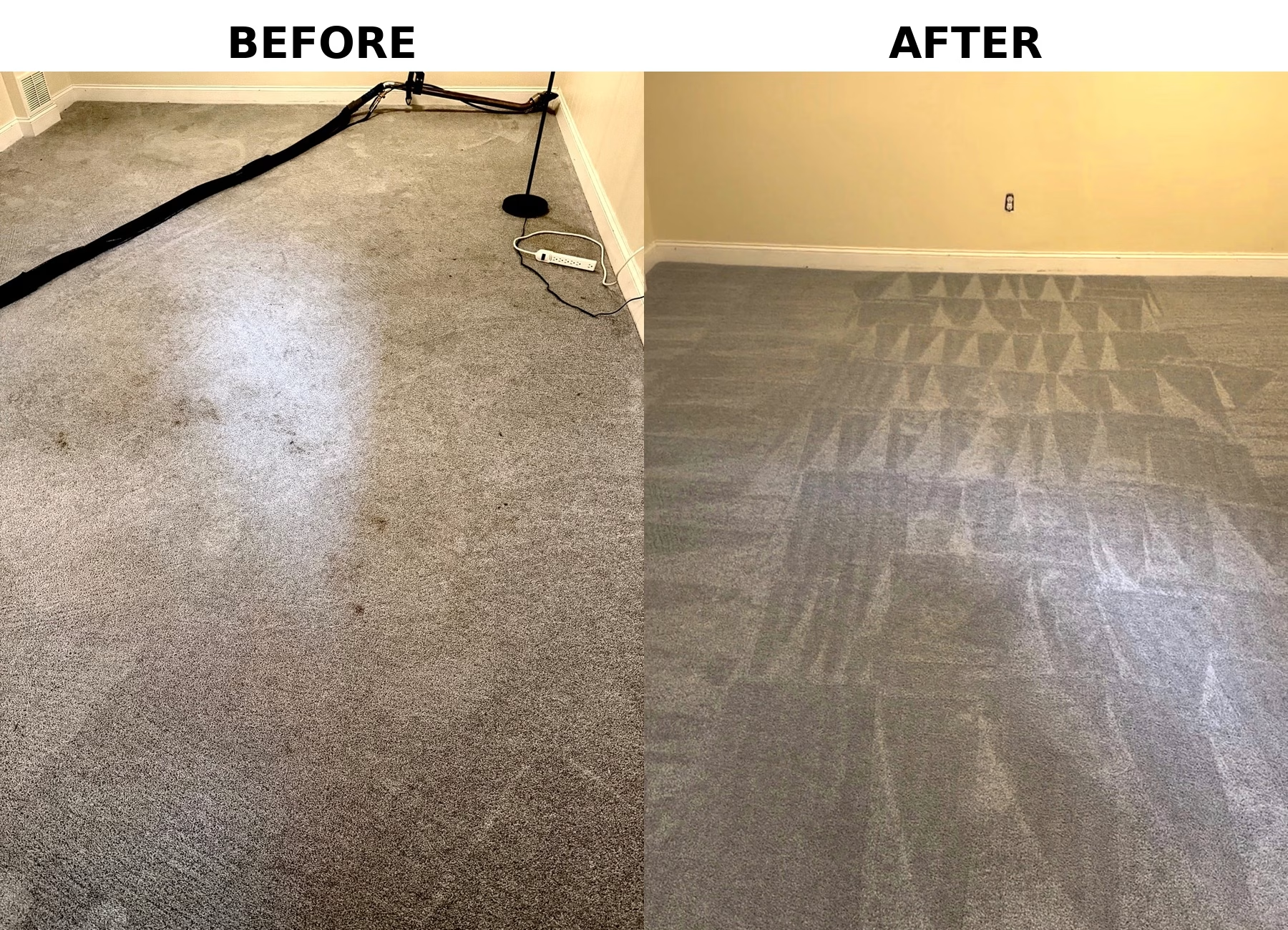

Short version
You can’t smell your own house. Your nose adapted to it weeks ago, so when I ask whether you want a deodorizer and you say “we’re good, nothing smells,” I believe that’s what you’re experiencing — but that’s not your nose being honest, it’s your nose being asleep. The people who notice are the ones walking in for the first time: a guest, a buyer at a showing, the new sitter, the in-laws.
A real deodorizer isn’t about covering a stink you can already smell. It’s about neutralizing what your nose stopped reporting — and keeping a wet cleaning from waking an odor back up. I’ll always tell you straight whether it’s worth it for your place. Sometimes it flat-out isn’t, and I’ll say so.
Why You Can’t Smell Your Own House
This isn’t a knock on you — it’s how your nose is built. The technical name is olfactory fatigue, but everybody just calls it nose-blindness. Your brain is wired to stop reporting smells that never change so it can pay attention to new ones. Walk into a constant odor and within a few minutes your nose files it under “background noise” and quits flagging it. It’s the same reason you stop hearing your own refrigerator hum. That’s why you smell your neighbor’s house the second you step in the door but can’t smell your own to save your life.
So when someone tells me their carpet is fine and there’s no odor, I take them at their word. I just know the test is rigged — your nose was disqualified the day you moved in. The only honest nose for your house is one that hasn’t been living in it.
Who Actually Notices (and When It Matters)
Here’s where it stops being trivia and starts costing you something. The people whose noses still work in your house are exactly the ones you’d rather impress:
- Buyers at a showing. Out here in Washington County the market moves, and a faint pet or basement smell is the fastest way to make someone subconsciously knock money off your house. They won’t say “it smells.” They’ll say “it didn’t feel clean” and move on — and that knocks real dollars off your number. A neutral-fresh home shows better, full stop.
- Guests and family. The in-laws, the holiday crowd, the friend who hasn’t been over in a while. They clock it in the first ten seconds and they’re far too polite to mention it.
- A new sitter or nanny. Fresh nose, brand-new to your space, forming a first impression of how you keep your home.
- Anybody with allergies or asthma. They don’t just smell it — they react to it. Same goes for a new baby coming home to a carpet that’s been quietly building up odor and bacteria.
If none of those apply to you, that’s a fair reason to skip it, and I’ll say so. But most folks have at least one.
The Smells You Adapted to Without Noticing
Nose-blindness is worst with the slow builders — the odors that creep in a little at a time, so you never get the “whoa” moment that would tip you off:
- Pets. Dander, the dog bed, the spot by the back door. Randy keeps our place lively too, so no judgment here — but pet odor is the number-one thing owners go nose-blind to.
- Cooking and fry oil. It drifts, lands in the carpet fibers, and stacks up over months.
- Smoke. Cigarettes, the occasional cigar, even heavy candle use. It soaks in deep.
- Damp basements. Big one around here. Our humid Pittsburgh-area summers keep lower levels just moist enough to grow that musty mildew smell, and you stop noticing it before it ever gets strong.
- Gym bags, cleats, the catch-all corner. You know the spot.
The Part Most People Don’t Know: Cleaning Can Wake a Smell Up
This is the one I really want you to hear, because it sounds backwards. Odors don’t just sit on the surface fibers where a vacuum reaches them — they live dormant deep down in the pad and the backing, the layers under your carpet you never touch. Pet urine is the textbook case: when it dries, it leaves salt crystals behind. Dry, those crystals are quiet, which is why an old accident you forgot about doesn’t smell on a normal day. But here’s the catch — cleaning adds moisture, and moisture re-activates them:
- Dry carpet hides it. The salts and bacteria sit dormant down in the pad while everything is dry, so the smell stays asleep.
- Moisture re-activates it. The water from cleaning re-dissolves those urine salts and feeds the bacteria, releasing the exact ammonia smell that was sleeping.
- You can smell something that wasn’t there before. A carpet that seemed fine dry can give off a faint odor while it’s damp — not because the cleaning failed, but because it briefly woke up what was buried.
A proper deodorizer gets ahead of that during the cleaning — not by spraying perfume over it, but by neutralizing the odor compound itself so the moisture has nothing left to reactivate. If you’ve ever had a carpet cleaned and thought “why does it smell like a wet dog now,” this is usually why, and it’s avoidable.
Neutralizing vs. Masking — They’re Not the Same Thing
This is where the grocery-store stuff fails you. A can of carpet “fresh” powder or a plug-in masks the odor — it just puts a louder, nicer smell on top. A couple days later the cover-up fades and the original is right back where it was, because you never removed anything. You just rented a delay.
A real deodorizer neutralizes at the molecular level. The oxidizers and enzymes I use actually break the odor compound apart so there’s nothing left to smell. No compound, no smell — not hidden, gone. One hides the problem; the other ends it.
The Bonus: It Controls Tomorrow’s Smell Too
Most of the deodorizers I use carry an antimicrobial, sanitizing side benefit. That knocks down the bacteria and mildew that create odor in the first place. So you’re not just clearing today’s smell — you’re controlling tomorrow’s before it ever builds up strong enough for even a fresh nose to catch.
That matters most in exactly the conditions we deal with around here: damp basements, humid PA summers, and homes with pets, little kids on the floor, or allergy sufferers. It buys you a longer stretch of genuinely clean before things start creeping back.
When I’ll Tell You to Skip It
And I mean it — this is where the honesty earns your trust. If you’ve got a clean, odor-free home, no pets, no smokers, no damp basement, and you’re not selling, then a deodorizer is optional. I’m not going to tack it onto your bill just because it’s on the menu.
That’s the whole point of having me come out and look. Every house is different, and I’d rather tell you the truth about your carpet than sell you a step you don’t need. A customer I leveled with is a customer who calls me back — that math has worked for 40-plus years of family experience, and I’m not about to mess with it.
Bottom Line
A deodorizer isn’t magic and it isn’t mandatory, and I’ll never pretend it is. If you’ve got a clean, odor-free home with no pets and no showing coming up, it can absolutely be optional — and I’ll tell you that to your face rather than tack it onto your bill.
But “I can’t smell anything” is not the test, because your nose was disqualified the day you moved in. If you’ve got pet history in the pad, a damp basement, a baby on the way, allergy folks in the house, or a home about to hit the market, the deodorizer is usually worth every penny — and it stops a cleaning from waking up a smell that was sitting quiet. Tell me your situation and I’ll give you the honest call.
Serving Canonsburg, Washington County, and the greater Pittsburgh area. Want a straight answer on whether your carpet actually needs a deodorizer — no upsell? Call me for a free estimate at (724) 322-7556.
— Nick, Superior Carpet and Tile Cleaning. Randy Approved.
Leave a Reply