Author: superior-carpet

  • Carpet Wear vs. Dirt: Why That “Dirty” Spot Won’t Come Clean

    Short version

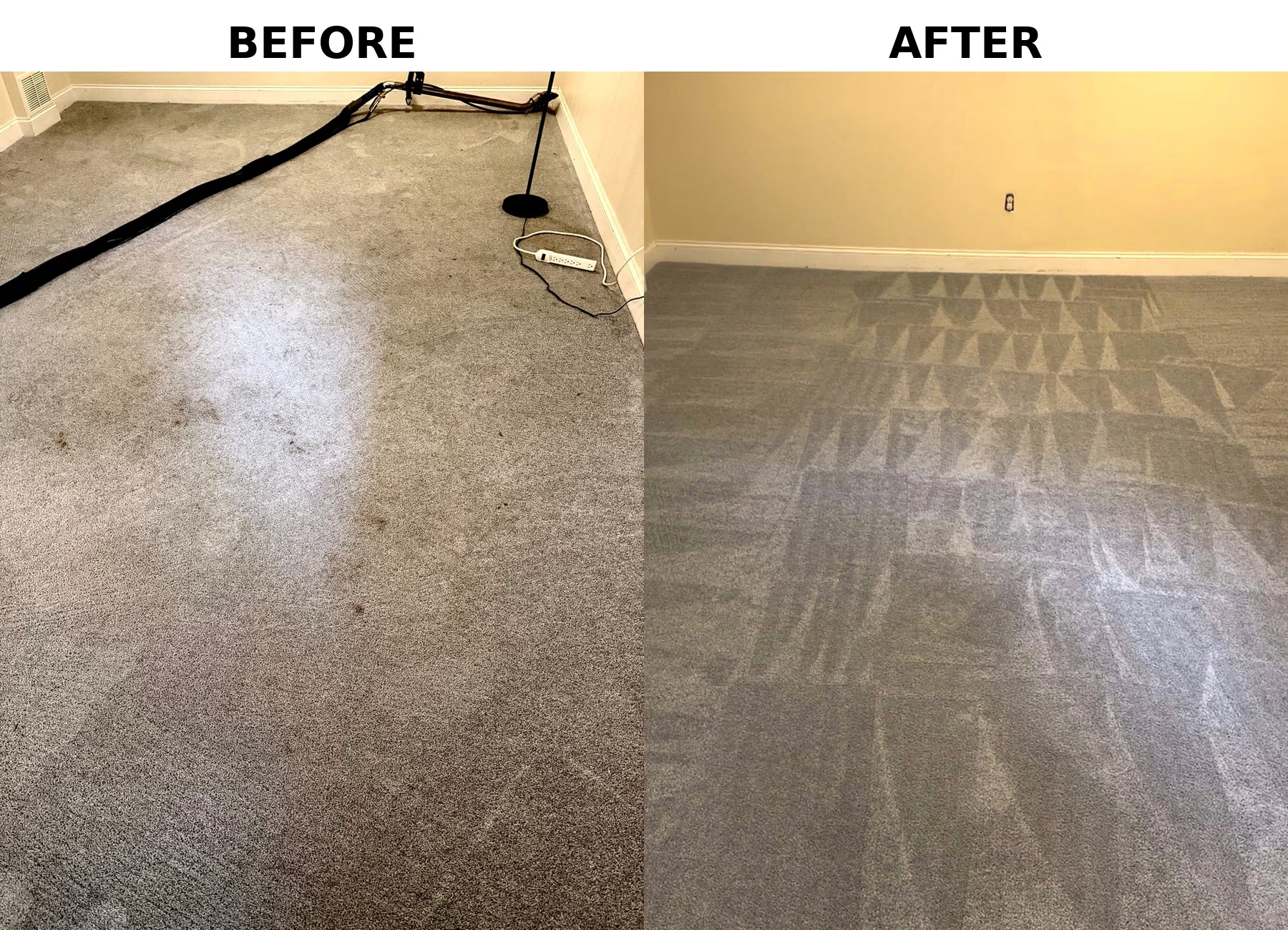
    If your carpet looks dingy in the same spots no matter how many times it gets cleaned — the hallway, in front of the couch, around the bed, near the door — you’re probably not looking at dirt. You’re looking at wear. And no cleaner on earth can put back what foot traffic has scrubbed off.

    This is one of the most common things I get asked about on a job: “Can you get this lane to match the rest of the carpet?” The honest answer is sometimes yes, sometimes no — and a big part of my job is telling you which one you’re dealing with before I unload the truck.

    What Carpet Wear Actually Is

    Carpet fibers are dyed on the outside. They’re not solid color all the way through — think of them like a colored pencil with a white core. When you walk on carpet thousands of times in the same path, three things happen at once:

    • Abrasion. Every footstep is sandpaper on a microscopic level. Shoes, socks, paws, grit you tracked in — they grind the fiber down.
    • Dye loss. As the outer layer wears away, the lighter inner fiber shows through. The color literally walks off your carpet.
    • Pile crush. The fibers lose their bounce and lay flat, which changes how light reflects off them. Flattened fibers look darker even when they’re perfectly clean.

    Add UV fading from sunlight, harsh DIY cleaners that strip the dye, and 10–20 years of life, and you get those classic gray pathways that no amount of scrubbing will fix.

    How to Tell Wear From Dirt

    You can usually figure this out yourself before you ever call me. Here’s the quick test:

    1. Look at the pattern. Dirt is random — spills, paw prints, tracked-in mud. Wear follows traffic: straight lanes between doorways, a half-circle in front of a recliner, a worn arc where a chair swivels.
    2. Check the edges of the room. Pull a piece of furniture back or lift the edge of a rug. If the carpet underneath looks brand new and the open area looks dingy, that’s wear — not soil. Dirt doesn’t magically avoid the spots that don’t get walked on.
    3. Feel the fiber. Run your hand across a clean area, then across the “dirty” spot. If the worn area feels rougher, scratchier, or flatter — that’s damaged fiber, not embedded dirt.
    4. Look at it after a cleaning. If the spot looks great wet and then comes right back the moment it dries, the dirt was never the problem. You were just temporarily seeing wet fiber reflect light differently.

    Why I Tell You This Before I Clean

    I’ve been doing this a long time — over 40 years of family experience between me and my father’s shop. The fastest way to make a customer unhappy is to take their money, clean the carpet, and have them disappointed because the traffic lane is still visible.

    So when I show up for an estimate, I’ll point out the wear areas before I write the quote. I’ll show you the difference between a spot that’ll vanish with a hot-water extraction and a spot that’s permanent fiber damage. That way you know exactly what you’re paying for.

    A good cleaning will still make a worn carpet look dramatically better — cleaner, fresher, brighter overall. It just won’t turn back the clock on the fibers themselves.

    What You Can Actually Do About Wear

    If the wear is bad, your real options are:

    • Live with it. A clean worn carpet still looks 80–90% better than a dirty worn carpet. For a lot of customers, that’s plenty.
    • Patch or re-stretch. If the damage is in one localized area and you have a remnant, a flooring installer can sometimes swap a section.
    • Carpet dyeing. A specialty service (we don’t do it in-house) where worn lanes get re-tinted. Works in some situations — ask me and I’ll tell you if I think it’s worth pursuing for your carpet.
    • Replace. If your carpet is 15+ years old and worn through in multiple rooms, replacement may genuinely be the better dollar-per-year decision.

    How to Slow Down Future Wear

    For carpet that’s still in good shape, a few small habits make a huge difference:

    • Vacuum weekly — especially in traffic lanes. The grit you can’t see is the grit that’s grinding your fibers down with every step.
    • Walk-off mats at every entry. Most of what wears carpet comes in on shoes.
    • Rotate furniture occasionally to change the traffic pattern.
    • Get it professionally cleaned every 12–18 months. Manufacturers actually require this to keep most warranties valid — and it removes the abrasive grit that vacuuming alone misses.
    • Skip the rental machines and DIY chemistry. Most of the worst wear/dye loss I see is from over-wetted carpet, harsh detergents that never got rinsed out, and bleach-based spot treatments.

    Bottom Line

    If your carpet has spots that won’t come clean no matter what, it’s not your fault and it’s not because your last cleaner did a bad job. Carpet wears out the same way the soles of your shoes do — you just don’t see it happen because it’s gradual.

    What a professional cleaning will do: pull out the embedded grit that’s actively wearing your carpet right now, lift the pile, knock down any real soil and odor, and buy you years of additional life on the carpet you’ve got.

    Serving Canonsburg, Washington County, and the greater Pittsburgh area. Want me to come out, look at what you’re dealing with, and tell you honestly whether cleaning will fix it? That’s a free estimate. Text or call (724) 322-7556.

    — Nick, Superior Carpet and Tile Cleaning. Randy Approved.

  • How Stains Affect Carpet Dye (And Why DIY Cleaning Can Make It Permanent)

    Most homeowners think a stain is just something sitting on top of the carpet. The reality is more complicated. Depending on what spilled, how long it sat, and what you used to clean it, the stain can chemically change the dye in your carpet fibers — sometimes permanently. Nothing demonstrates this faster than pet urine, which is by far the most destructive household stain to carpet dye.

    Here’s what’s actually happening at the fiber level, why pet urine is in a category of its own, and why the cleanup method matters more than the spill itself.

    How Carpet Is Dyed

    Most residential carpet is one of three fiber types:

    • Nylon (acid-dyed) — Dye molecules bond to the fiber through a chemical reaction. Strong, vibrant color, but the bond can be broken by the wrong chemistry. This is the fiber most vulnerable to pet urine damage.
    • Polyester / PET — Often solution-dyed (color added before the fiber is extruded). More stain-resistant, but holds oily soils.
    • Olefin / Polypropylene — Almost always solution-dyed. Extremely colorfast, but absorbs oil-based stains aggressively.

    The dye type determines what a stain can — and can’t — do to the color.

    What Stains Actually Do to Dye

    1. They strip the dye

    Anything alkaline (high pH) breaks acid-dye bonds on nylon carpet. Common culprits:

    • Pet urine after it dries and oxidizes (covered in detail below)
    • Household alkaline cleaners (oven cleaner, degreasers, some grocery-store carpet shampoos)
    • Bleach or oxidizers

    You see this as a yellow, orange, or pink patch where the original color used to be. The fiber itself is fine — the dye is gone.

    2. They add new color

    Foreign dye gets deposited into or onto the fiber:

    • Red dye from drinks, popsicles, kids’ medicine
    • Coffee and tea (tannin staining)
    • Mustard and turmeric (curcumin — extremely stubborn)
    • Ink and marker

    On nylon, foreign dye can bond with the fiber the same way the original dye did. Once it bonds, normal cleaning won’t remove it.

    3. They react chemically with the dye

    The most damaging category:

    • Cellulosic browning — sugars and tannins from spills wick up from the carpet backing during cleaning and oxidize into a yellow-brown haze.
    • Sun fading plus a wet spill — UV-weakened dye is much easier to strip.
    • Acid bleaching — strong acidic spills (battery acid, some toilet bowl cleaners) destroy dye outright.

    Pet Urine: The Worst Offender for Carpet Dye

    Pet urine deserves its own section because no other household stain causes more permanent dye damage. Most homeowners think the smell is the worst part. In reality, the smell is the warning sign — the dye damage is the real problem.

    Why urine destroys carpet dye

    Fresh pet urine is mildly acidic and relatively easy to deal with if you catch it immediately. But as soon as it dries, bacteria break down the urea and release ammonia. The pH climbs from around 6 (acidic, dye-safe) to 9 or higher (alkaline, dye-destructive). On a nylon carpet, that alkaline shift breaks the dye bonds and lifts color right out of the fiber.

    That’s why old pet stains look orange, yellow, or pink even after you scrub the spot clean — the urine is gone, but the dye went with it.

    It gets worse with every accident

    Pets return to the same spots. Each repeat deposit:

    • Adds more alkaline residue to dye that’s already weakened
    • Soaks deeper into the carpet backing and pad
    • Leaves urine salts that reactivate with humidity — the smell comes back every summer until the salts are flushed out
    • Causes the spot to spread as the contamination wicks outward

    A spot that’s been hit five times by a dog is not the same job as a fresh accident. The dye damage is cumulative.

    Why store-bought pet cleaners often make it worse

    Most grocery-store “pet stain” sprays are alkaline. You’re treating an alkaline residue with more alkaline product on a fiber whose dye is already half-destroyed by alkalinity. The visible spot might lighten temporarily, but you’re accelerating the dye loss.

    Enzyme cleaners work on the smell because they break down the organic component, but most of them don’t address the alkaline salts or restore pH balance to the fiber. Smell gone, color still gone.

    What actually works for pet stains

    1. Find every spot, not just the visible ones. A UV/black light identifies hidden urine deposits that look fine in daylight but are silently destroying dye.
    2. Flush the contamination, don’t just clean the surface. Urine soaks into the pad and subfloor. Surface cleaning won’t touch that.
    3. Neutralize the pH. Enzyme treatment to break down the organic residue, then an acid-side rinse to bring the fiber back into the dye-safe zone.
    4. Extract thoroughly. Heavy water with controlled extraction — not scrubbing.

    If you’re dealing with repeat pet accidents, see our pet waste removal service page for the full process and what to expect.

    Why DIY Cleaning Usually Makes It Worse

    Three things go wrong:

    1. Wrong pH. Most grocery-store carpet cleaners are alkaline. On a nylon carpet that’s already had urine damage, an alkaline cleaner finishes the job — you end up with a bigger, lighter patch than you started with.
    2. Heat. Steam or hot water on a protein stain (blood, egg, milk, urine) cooks the protein and locks it into the fiber.
    3. Agitation. Scrubbing with a brush distorts the fiber face and creates a permanent texture difference that reads as a stain even after the color comes out.

    What a Professional Approach Looks Like

    When we treat a stain at Superior Carpet and Tile Cleaning, the process is:

    1. Identify the fiber and the stain. pH-test the affected area. Determine if dye damage has already happened.
    2. Match chemistry to the soil. Acid rinse on alkaline residue, enzyme on protein, oxidizer on tannin. The wrong product doesn’t just fail — it makes the spot permanent.
    3. Dwell, don’t scrub. Let the chemistry do the work. Heavy agitation damages the fiber face.
    4. Extract with a neutral or acidic rinse. Leaves the carpet at a pH that’s safe for the dye.

    If dye loss has already happened, there are options — spot dye correction, area-specific re-dyeing, or section replacement — but those are separate jobs from cleaning.

    The Bottom Line

    A spill is not the same as a stain. A stain is what happens when a spill chemically changes the carpet — and most of the time, that change is caused by what you do to clean it, not the spill itself. Pet urine is the most common culprit because every day it sits, the chemistry gets more destructive.

    If you spill something:

    • Blot, don’t scrub
    • Use cool water, not hot
    • Skip the grocery-store cleaner
    • Call a pro before the spot dries — especially for pet accidents

    Superior Carpet and Tile Cleaning services Canonsburg, Washington County, and the greater Pittsburgh area. Call (724) 322-7556, learn about our pet waste removal service, or request a free quote online.

  • How Often Should Washington County Homeowners Professionally Clean Their Carpets?

    If you live in Canonsburg, McMurray, Peters Township, or anywhere across Washington County, your carpets take a beating. Between muddy spring boots, summer foot traffic, pet accidents, and winter road salt tracked in from the driveway, even the cleanest-looking carpets hold more grime than most homeowners realize. The question we hear most often from local families is a simple one: how often should I actually have my carpets professionally cleaned?

    The short answer is every 12 to 18 months for most households — but the real answer depends on what’s happening inside your home. Let’s break it down.

    The General Rule: Once a Year for Most Homes

    For a typical household with one or two adults, light foot traffic, and no pets, a yearly professional cleaning is plenty. Carpet manufacturers like Shaw and Mohawk actually require professional hot water extraction every 12 to 18 months to keep your warranty valid. Most homeowners don’t realize this until a carpet claim is denied because the cleaning history doesn’t exist.

    At Superior Carpet and Tile Cleaning, we recommend scheduling your annual cleaning in the spring. Winter in Western Pennsylvania means road salt, mud, and wet boots getting dragged across every fiber — spring is when all of that comes out.

    When You Should Clean More Often

    Several household factors bump that schedule up to every 6 to 9 months:

    • Pets in the home. Dog or cat dander, oils from their fur, and the occasional accident all settle deep into the backing. If you’ve got a shedder, you already know the vacuum isn’t keeping up.
    • Young children. Spills, snacks, and floor play push allergens and food residue into the pile where regular vacuuming can’t reach.
    • Allergy or asthma sufferers. Dust mites, pollen, and pet dander concentrate in carpet. Quarterly cleanings noticeably reduce flare-ups.
    • High-traffic areas. Hallways, stairs, and living rooms wear down fastest. Spot cleanings between full services extend the life of the carpet.
    • Smokers in the home. Tobacco residue clings to fibers and releases odor for months after the fact.

    Signs Your Carpet Needs a Cleaning Right Now

    Don’t wait for the calendar if you’re seeing any of these:

    • Traffic lanes look darker than the rest of the carpet
    • A musty or pet odor that returns even after vacuuming
    • Visible stains from food, drinks, or pet accidents
    • Allergy symptoms that get worse indoors
    • The carpet feels crunchy, sticky, or matted underfoot

    Once you can see dirt, you’re looking at soil that has already worked past the tips of the fibers. Left alone, it grinds against the backing every time someone walks across it and permanently wears the carpet down.

    Why Spring Is the Ideal Time in Washington County

    Our local climate hits carpets hard. Salt from PennDOT crews, mud from thawing yards, and the grit that collects on every sidewalk from November through March ends up inside your home. By April, that buildup is sitting in your carpet.

    Professional hot water extraction — the truck-mounted method we use on every job — rinses out what a consumer rental machine can’t touch. Our equipment runs hotter, pulls harder, and leaves the carpet drier than anything you’ll get from a big-box rental.

    What About Pet Urine?

    Pet urine is a separate conversation from routine cleaning. Once urine soaks through to the carpet pad, surface cleaning won’t solve it — the odor keeps coming back every time humidity rises. We use UV detection to find every contaminated spot and enzyme treatments that break down the uric acid crystals at the source.

    If you have a pet that’s had accidents, don’t just schedule a general cleaning and hope for the best. Mention it when you book. We’ll bring the right chemistry.

    Ready to Schedule?

    Superior Carpet and Tile Cleaning has been serving Washington County families since 1985. We’re a family-owned, owner-operated business based right here in Canonsburg, and we service Washington, McMurray, Peters Township, Cecil Township, Houston, Chartiers Township, Bethel Park, Upper St. Clair, and the surrounding communities.

    Residential carpet cleaning starts at $55 per room, and we’re fully equipped for pet stains, tile and grout, upholstery, and area rugs.

    Call us at (724) 322-7556 or visit steamfloors.com to book your spring cleaning today. Your carpets will thank you — and so will your warranty.

  • Got Pet Stains? Here’s Why DIY Carpet Cleaning Won’t Cut It in Washington County

    Your Pets Are Family — But Their Accidents Don’t Have to Ruin Your Carpets

    If you’re a pet owner in Canonsburg, McMurray, or anywhere in Washington County, you know the drill. Your dog gets excited, your cat misses the litter box, and suddenly there’s a stain — and a smell — that just won’t go away.

    You’ve probably tried everything: baking soda, vinegar, store-bought sprays, even renting a machine from the hardware store. But here’s the truth most carpet cleaning companies won’t tell you: DIY methods often make pet stains worse.

    Why Store-Bought Products Fall Short

    Most retail carpet cleaners only treat the surface. Pet urine doesn’t just sit on top of your carpet — it soaks deep into the padding and even the subfloor. That’s why the smell keeps coming back, especially on humid Pennsylvania days.

    Worse, some products contain chemicals that actually set the stain permanently by bonding with the proteins in pet urine. Once that happens, even professional cleaning becomes more difficult.

    How Professional Pet Stain Removal Actually Works

    At Superior Carpet and Tile Cleaning, we use a completely different approach:

    • UV Detection: We use ultraviolet light to find every stain — even old, invisible ones you didn’t know were there.
    • Enzyme Treatments: Professional-grade enzyme solutions break down urine proteins at the molecular level, eliminating both the stain and the odor at the source.
    • Hot Water Extraction: Our truck-mounted equipment reaches deep into carpet fibers and padding where DIY machines simply can’t.

    Serving Pet Owners Across Washington County Since 1985

    We’ve been helping families in Canonsburg, Washington, McMurray, Peters Township, Cecil Township, Upper St. Clair, and Bethel Park keep their carpets clean for over 40 years. We understand that your pets are part of the family — and we’ll treat your home with the same care you do.

    Pet stain removal starts at just $55 per room. No hidden fees, no upselling — just honest, professional cleaning that gets the job done right the first time.

    Ready to Get Rid of Pet Stains for Good?

    Call us today at (724) 322-7556 or visit steamfloors.com to schedule your appointment. Same-day service is often available.

    Superior Carpet and Tile Cleaning — Canonsburg’s trusted, family-owned carpet cleaning experts since 1985.

Call Now — (724) 322-7556